Meta’s aggressive recruitment is not just making headlines — it’s blowing up, and we’re not surprised. The numbers are what make it astonishing: $100 million deals.
With that kind of hike, it’s worth the hype and the surprise. It’s the declaration of a talent war, where many tech elites are switching sides.
While the compelling offer of $100 million (and more) has attracted many, others have turned it down.
What is this Attractive Offer by Meta?
As we witness this massive shift in allegiance and alliance, it’s definitely worth asking: what did it take to get top researchers to leave their comfortable positions?
On the surface, we’ve heard about $100 to $200 million over four years — but there’s more in store. Some offers were reportedly at billion-dollar levels.
Meta has also acquired stakes in AI startups like Scale AI ($14.3 billion for a 49% stake).
They’re reportedly planning to hire key figures like Daniel Gross of Safe Superintelligence and former GitHub CEO Nat Friedman, alongside their investment firm NFDG, showing just how much financial muscle Meta is flexing.
Silicon Valley’s Talent Wars: A Strategic History
This isn’t Meta’s first rodeo. Silicon Valley has been playing the talent acquisition game for decades, and the precedent is telling.
In the early 2010s, Apple, Google, Intel, and Adobe faced a major lawsuit for colluding to avoid poaching each other’s engineers — essentially an anti-competitive pact that ended up costing them $415 million in class-action settlements.
Since then, the poaching trend went underground but became significantly more strategic.
Apple and Google have been quietly competing over AI talent for years, with Google offering massive bonuses specifically to retain key engineers who might otherwise jump ship.
The Uber vs. Google/Waymo case in 2017 showed exactly where the legal boundaries lie. Uber was accused of stealing trade secrets after hiring a former Google engineer, ultimately settling for $245 million and demonstrating the real risks when aggressive hiring crosses into questionable territory.
Now Meta has entered with a war chest that outshines those previous efforts. But they’re not just throwing money around — they’re systematically targeting the architects, the breakthrough minds, the people who actually drive innovation forward.
Navigating the Legal Boundaries
Meta’s approach shows they understand the legal landscape well and are working within established frameworks while pushing boundaries.
The current playbook involves several key strategies:
“Clean Room” Development: Companies establish isolated workspaces where new hires are instructed not to reference their previous employer’s work, basically telling them, “Hey, don’t use what you know from before, just use your general genius.” The practical effectiveness remains debated, but it provides legal protection when challenged.
General Expertise Hiring: Organizations frame recruitment around broad intelligence and experience rather than specific proprietary knowledge. This makes it harder to prove violations since general expertise is more difficult to regulate legally.
Jurisdictional Advantages: California’s legal environment makes non-compete agreements largely unenforceable, though NDAs and IP clauses remain binding. Enforcement typically requires substantial digital evidence.
Temporal Separation: Strategic waiting periods before involving new hires in critical projects create legal distance from previous work, even when everyone understands the underlying dynamics.
The collaborative nature of AI research provides natural cover. When multiple organizations work on similar problems, proving deliberate knowledge transfer versus independent development becomes extremely challenging.
Industry Leadership Weighs In
OpenAI’s Sam Altman has been notably direct about Meta’s recruitment tactics. Speaking on the Uncapped podcast, he revealed the scale of what his team is facing:
“They started making these giant offers to a lot of people on our team … like $100 million signing bonuses, more than that compensation per year … so far none of our best people have decided to take them up on that.”
Altman’s criticism goes beyond the numbers, questioning the cultural implications: “To the degree to which they’re focusing on that, and not the work and not the mission, I don’t think that’s going to set up a great culture.”
It’s a pointed critique, but when someone’s offering $100 million signing bonuses, even the most mission-driven researchers have to at least consider what that kind of financial security could mean for their families and future work.
Ethics? What Ethics?
This is where things get messy.
Is Meta building the future… or just absorbing everyone else’s homework? When a trillion-dollar company starts scooping up entire R&D teams, it stops being innovation and starts looking like IP laundering.
No, it’s not illegal to be smart. But it gets ethically dicey when the smartest people from your rivals suddenly help your team “rethink” a suspiciously similar approach.
Even OpenAI’s CEO couldn’t hold back — publicly calling out Meta for throwing around $100M bonuses to lure his researchers. That’s not a collab. That’s a talent raid.
The bigger question: when you can outspend everyone else by orders of magnitude, are you competing on merit or just financial firepower? And what happens to the smaller labs that can’t play in this billion-dollar sandbox?
The Broader Impact
Meta’s recruitment strategy is reshaping the entire AI ecosystem in ways that extend far beyond individual job changes.
The financial scale is setting new compensation expectations across the industry. When one company offers generational wealth as signing bonuses, other organizations face an impossible choice: match the spending or lose their talent. Most simply can’t compete at these levels.
This creates a concerning concentration dynamic. AI talent was already scarce, and now it’s increasingly flowing toward whoever has the deepest pockets.
That’s not necessarily great for innovation diversity or the kind of distributed development that has historically driven AI progress.
There’s also the question of what happens to collaborative research. The traditional academic-style openness that has characterized much AI research faces pressure when the financial stakes reach these levels. Competition at this scale doesn’t exactly encourage knowledge sharing.
Looking Ahead
Meta’s talent acquisition strategy represents a significant bet: that assembling the most expensive team in AI history will accelerate their path to superintelligence.
Whether that bet pays off depends on some fundamental questions about how breakthrough innovation actually happens.
The approach is testing established norms around talent mobility, competitive practices, and the role of financial incentives in driving innovation.
The results will likely influence how the entire industry approaches talent acquisition going forward.
What’s certain is that the competition for AI leadership has evolved well beyond technical capabilities. It now encompasses talent acquisition, organizational culture, and strategic positioning at unprecedented financial scales.
The talent war is officially on. And in a field where the winner might fundamentally reshape human civilization, maybe $100 million signing bonuses aren’t as outrageous as they first appear.
On May 11, 2025, Vishnu Irigireddy, a 48-year-old tech executive, fell 400 feet to his death while descending the North Early Winters Spire in Washington’s North Cascades. His anchor failed during descent as a storm approached.
Irigireddy’s death highlights a growing concern: hiking fatalities among Indians and NRIs are rising, even as the activity becomes more popular than ever.
This tragedy raises important questions about why hiking incidents are increasing, particularly among NRIs, and whether the growing popularity of adventure tourism is outpacing safety awareness.
The Deadly Romance with Dirt and Danger
We’ve turned hiking into the ultimate lifestyle brand. It’s not just exercise anymore—it’s rebellion against cubicle culture, a rejection of the digital prison that modern work has created.
Every weekend warrior with a $300 hiking boot collection and a Patagonia jacket has become an amateur philosopher, preaching the gospel of “getting back to nature.”
And honestly? It makes perfect sense. After spending days debugging code or sitting through soul-crushing Zoom meetings, the idea of earning those summit moments through sweat and suffering feels intoxicating.
The mountains don’t care about your quarterly targets or your Slack notifications. They’re the ultimate meritocracy—you either make it to the top, or you don’t.
But here’s the problem: social media has Instagram-ized the wilderness. Those perfectly curated posts—the golden hour shots, the triumphant summit selfies, the “challenging myself” captions—they’re selling a dangerous fantasy.
They show you the postcard, not the avalanche that buried three hikers the day before, or the helicopter that couldn’t reach the stranded climber because of weather.
For Indians and NRIs especially, hiking has become the new status symbol. It’s replaced the luxury car photos and five-star vacation posts.
Now it’s all about that authentic, rugged, “I-survived-altitude-sickness” credibility. People are chasing experiences that make them feel alive, but they’re doing it with the same competitive spirit that drives corporate ladder climbing.
The Numbers Don’t Lie (And They’re Terrifying)
Let’s rip off the Band-Aid: between 2013 and 2023, 312 Indian and Indian-origin hikers died on trails around the world.
That’s not just a statistic—that’s 312 families destroyed, 312 dreams cut short, 312 people who thought they were just going for a really long walk.
The International Mountain Safety Council found that Indians represent 4.3% of all non-local hiking deaths globally. Think about that. These are people who flew thousands of miles to die on someone else’s mountain.
Here’s what killed them:
Vishnu Irigireddy (2025): North Cascades, Washington. Equipment failure during storm descent. Fell 400 feet.
Aakash Mehta (2024): Kedarnath, India. Heart attack at altitude. His body couldn’t handle the thin air his mind was determined to conquer.
Rhea Kapoor (2023): Inca Trail, Peru. Severe altitude sickness. She probably felt invincible until her brain started swelling.
Rohit Subramanian (2022): Banff, Canada. Avalanche during solo hike. One wrong step on an unstable slope.
Neha Dandekar and her group (2021): Himachal Pradesh. Landslide. Nature’s reminder that it doesn’t negotiate.
The worst part? These are just the headline cases. How many others died quietly, their stories buried in local news, their families left to grieve without the world ever knowing their names?
Recently, a social media post highlighted the personal toll of these tragedies: “SOS: Urgent – my niece passed away (high altitude related death) while visiting Titicaca in Peru with her husband and 9-year-old son. Her husband is distraught and needs help/support bringing her body back to India…”
This message reveals the harsh reality behind adventure tourism. Families are left dealing with language barriers, legal complications, and astronomical repatriation costs in foreign countries when these tragedies occur.
The Data Behind the Danger: Hiking Deaths Are Rising Globally
Hiking and mountaineering fatalities have increased worldwide as participation has surged.
United States Data
According to the U.S. National Park Service:
• Over 300 search and rescue deaths occur annually in U.S. parks • Thousands more rescues happen each year • The majority involve hikers aged 30–55 • Common causes:
Falls
Altitude sickness
Weather exposure
Medical emergencies
Washington State alone reports dozens of serious hiking accidents every year.
Why We’re All Rushing to Die in Peru
Peru has become a top destination for NRI adventure seekers, and it’s not hard to see why.
The country offers everything our community craves: ancient history that rivals our own civilizations, Instagram-worthy vistas that make your friends jealous, and spiritual energy that promises to heal whatever corporate America broke inside you.
Plus, it’s relatively cheap. You can feel like an adventurer without breaking your tech salary budget.
The Inca Trail costs less than a weekend in Napa Valley, and the photos are infinitely more impressive.
But Peru is also where dreams go to die—literally. The altitude hits you like a truck. One day you’re fine, the next you’re vomiting blood because your lungs are drowning in fluid.
The weather changes faster than your iPhone can update its forecast. And if something goes wrong, you’re really, truly alone.
The Mountain Doesn’t Care About Your LinkedIn Profile
The real dangers of hiking extend far beyond dramatic falls. Altitude sickness is a silent killer that creeps up on even experienced hikers. Above 8,000 feet, your body starts struggling to get enough oxygen. What begins as a mild headache can escalate into cerebral edema—your brain literally swelling inside your skull.
Then there’s the weather. Mountain conditions change in minutes, not hours. A sunny morning can turn into a whiteout blizzard by afternoon. Hypothermia doesn’t need freezing temperatures—it can set in at 50 degrees Fahrenheit if you’re wet and tired. Your body temperature drops, your thinking becomes clouded, and you start making the kind of poor decisions that turn a difficult situation into a fatal one.
Dehydration and exhaustion compound everything. At altitude, you lose water through breathing at twice the normal rate. Your judgment suffers, your coordination fails, and suddenly that easy scramble over rocks becomes a deadly obstacle course.
Even something as simple as getting lost can be life-threatening when you’re miles from cell service, carrying limited supplies, and facing an unexpected night in the wilderness. GPS devices fail, trails get obscured by weather, and what seemed like a straightforward day hike becomes a survival situation.
So Should You Hang Up Your Hiking Boots?
Hell no.
But maybe—just maybe—there’s a need to stop treating the wilderness like it’s another consumer experience to be conquered and Instagrammed. Maybe it’s time to remember that hiking used to be about actually experiencing nature, not just documenting it.
If you’re going to risk your life on a mountain, at least do it for the right reasons. Do it because you love the burn in your lungs and the ache in your legs. Do it because silence at sunrise actually heals something broken inside you. Do it because pushing your limits teaches you something about who you really are.
Don’t do it because you need content for your feed or because everyone else in your friend group has summit photos. Don’t do it because you think suffering makes you special or because you’re trying to prove something to people who wouldn’t even notice if you disappeared for a month.
The Real Adventure Starts with Respect
The mountains will always be there. They’ve been there for millions of years, and they’ll be there long after we’re gone. They don’t need us to validate them with our presence or our posts.
But if you’re going to visit them, do it right. Train properly. Learn to read weather patterns. Understand altitude sickness before it understands you. Hire guides who know the terrain better than you know your commute. Tell people where you’re going and when you’ll be back.
Most importantly, remember that the goal isn’t to conquer anything—it’s to come home with stories, not become one.
The mountains are calling, sure. But they’re not always calling you to the summit. Sometimes they’re calling you to turn around, to try another day, to choose survival over glory.
Listen carefully. Your life might depend on hearing the difference.
A social media post recently stirred discussions in the Irving, Texas Indian dining community. A diner alleged that the “goat biryani” served at a local restaurant tasted off — chewy, rubbery, and possibly reheated.
What followed was an outpouring of mixed reactions: some diners agreed, others reported no issue. Then came an unusual claim — that the restaurant might have served geep meat, a rare hybrid of goat and sheep.
This triggered both curiosity and concern. Many questioned whether such meat could legally or biologically exist, while others expressed deeper unease about transparency in food sourcing.
Geep Meat?
A geep — also known as a “shoat” or “chabin” — is the rare offspring of a sheep and a goat. Scientifically, it’s a hybrid cross between species of the genera Ovis (sheep) and Capra (goat).
While both animals share a common ancestor and can mate, viable offspring are extremely uncommon due to chromosomal differences (sheep have 54 chromosomes, goats 60).
Occasional births have been documented — notably in Ireland (2014) and Jamaica (2000s) — but such hybrids are almost never found in commercial meat supply chains. Regulatory bodies like the USDA and EFSA classify “geep meat” as an anomaly rather than a legitimate category of livestock product.
So, while the concept of geep meat isn’t fiction, it’s highly unlikely to appear in a restaurant kitchen, especially in imported or mass-processed supply chains.
The Indian diaspora in the U.S. is among the most active communities globally when it comes to remittances. The flow of money from the USA to India has been a significant economic force driven by various factors. This article delves into the reasons behind this trend, supported by relevant data, charts, and personal statements.
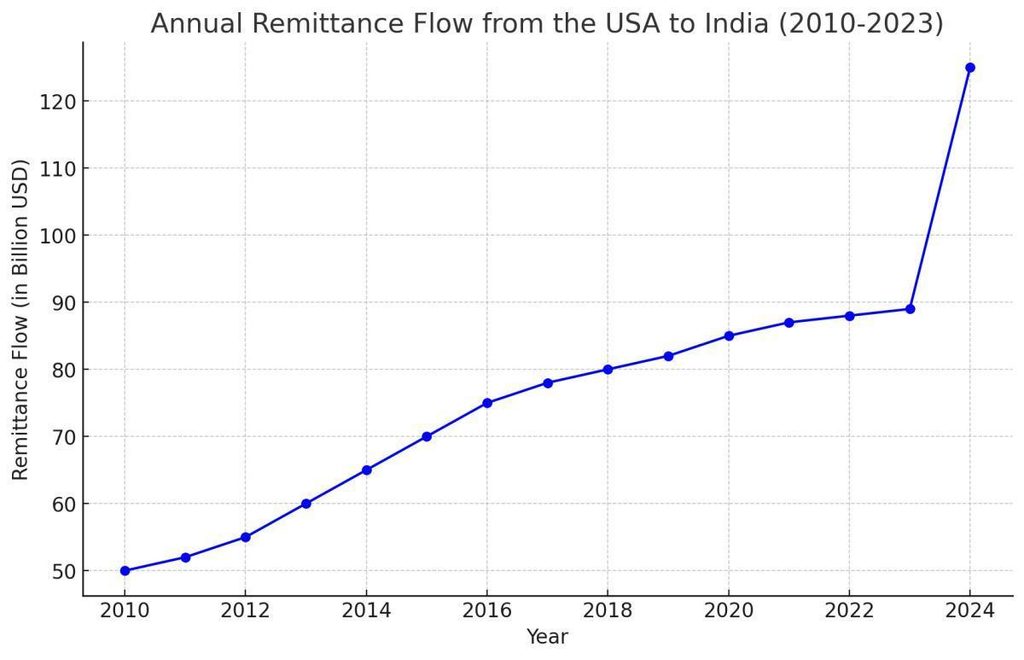
According to the World Bank, in 2023, the Indian diaspora in the U.S. sent approximately $89 billion out of a total of $125 billion to India, making India the largest recipient of remittances globally.
Media companies have widely reported on this staggering figure, highlighting the economic impact of the Desi-Indian diaspora. But do you know why they are sending this money? This article explores the diverse reasons behind these substantial remittances.
7 Key Reasons for Remittances: Why Indians in the U.S. Are Sending Billions to India-
1. Family Support and Social Obligations
Many in the Indian diaspora have close family ties in India, including parents, siblings, and extended relatives who may depend on financial support. Cultural values emphasize the importance of taking care of one’s family, which includes providing monetary assistance for daily living expenses, healthcare, and education.
Anu, a software engineer in California, shares,
“I send $500 every month to my elderly parents in India to cover their living expenses and medical bills. It’s my way of ensuring they are comfortable and well taken care of.”
2. Investment in Real Estate and Businesses
Members of the Indian diaspora often invest in real estate and businesses in India. With property prices and the entrepreneurial ecosystem growing, many see this as a lucrative opportunity. Investing in their homeland provides a sense of connection and future security.
Sanjay, an entrepreneur in New York, explains,
“I send $1,000 monthly to pay off the mortgage on my apartment in Mumbai. Investing in property back home not only gives me financial security but also a place to return to.”
3. Savings and Retirement Planning
The cost of living in India is generally lower than in the USA, making it an attractive option for savings and retirement planning. Many members of the Indian diaspora send money back home to save or invest in pension plans, insurance, and other financial instruments that offer better returns or benefits in India.
4. Charity and Philanthropy
The Indian diaspora is also known for its philanthropic efforts, which have contributed significantly to charitable organizations, social causes, and disaster relief efforts in India. This form of giving back to society is rooted in cultural and moral values.
Meena, a doctor in Texas, says,
“I donate $200 monthly to a non-profit organization in India that provides education to underprivileged children. Supporting these children’s education is my way of giving back to the community.”
5. Immigration Uncertainty, Green Card Backlogs, and Job Security
The long wait times and uncertainties surrounding green card applications motivate many in the Indian diaspora to maintain financial stability in India. This includes paying off homes, saving for education fees, and securing investments, ensuring a stable life if they need to return to India due to layoffs or visa issues.
Fear of job loss, especially while on H1B or L1 visas, adds to this need for financial security in their home country.
Raj, a tech professional in Seattle, mentions,
“With the green card backlog and potential layoffs, I make sure to have a paid-off house and savings in India. It’s a safety net in case I have to move back.”
6. Gifts and Special Occasions
It is common to send money to cousins, close friends, and family for special occasions like birthdays, anniversaries, weddings, and festivals. This helps maintain strong family bonds despite the distance.
Priya, a marketing manager in Chicago, adds,
“I often send money to my cousins and close friends in India for their birthdays and other special occasions. It keeps our connection strong and shows them I care.”
7. Paying Off Student Loans
Many Indian students come to the U.S. for higher education, often taking out loans to fund their studies. After graduation, they send money back to India to pay off these education loans.
Ravi, a recent graduate working in San Francisco, says,
“I took a loan for my master’s degree in the U.S. Now, I send a significant portion of my salary back home to pay off the loan. It’s important for me to clear this debt as soon as possible.”
Data and Figures
According to the World Bank, India received approximately $125 billion in remittances in 2023, making it the largest recipient of remittances globally. A significant portion of this comes from the Indian diaspora in the U.S. Here are some key data points and trends:
Remittance Volume Growth: The remittance volume from the USA to India has been steadily increasing over the past decade. In 2023, remittances from the USA constituted about 25% of the total remittances to India.
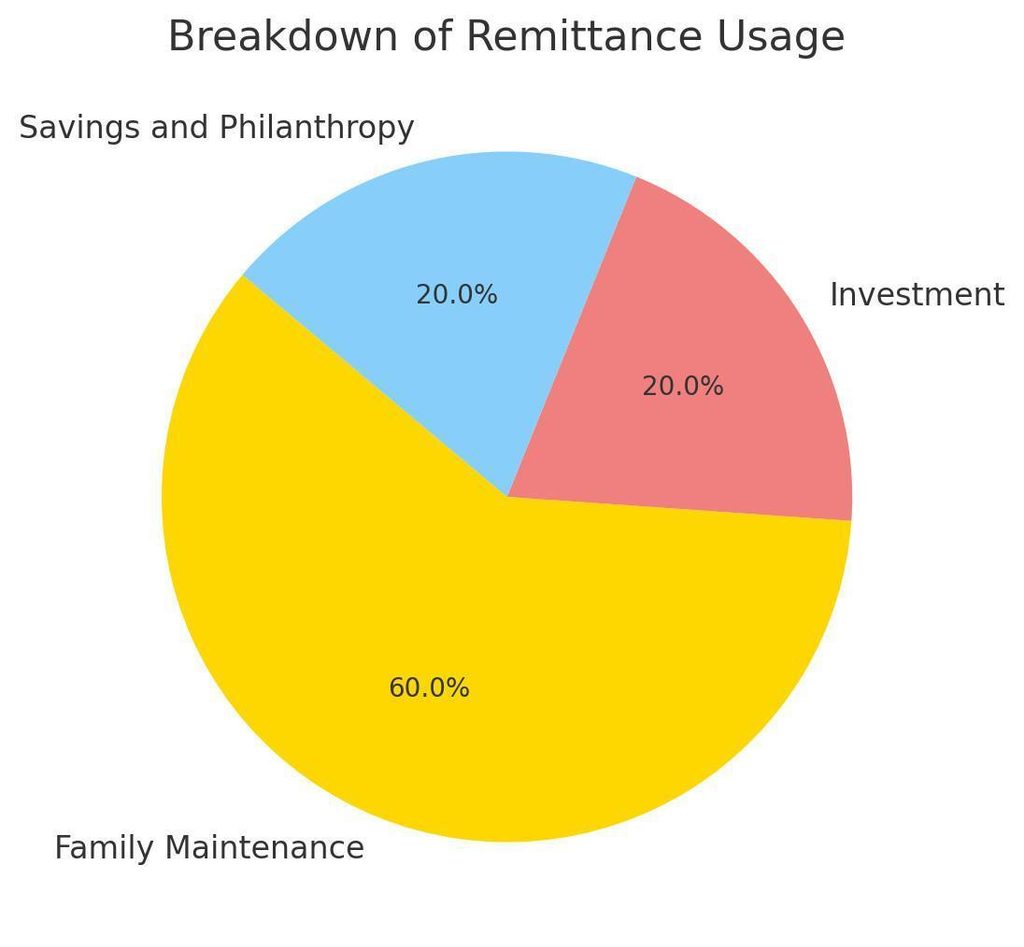
Purpose of Remittances: According to a survey by the Reserve Bank of India (RBI), around 60% of remittances are used for family maintenance, 20% for investment purposes, and the remaining for savings and philanthropy.
Visual Data Representation
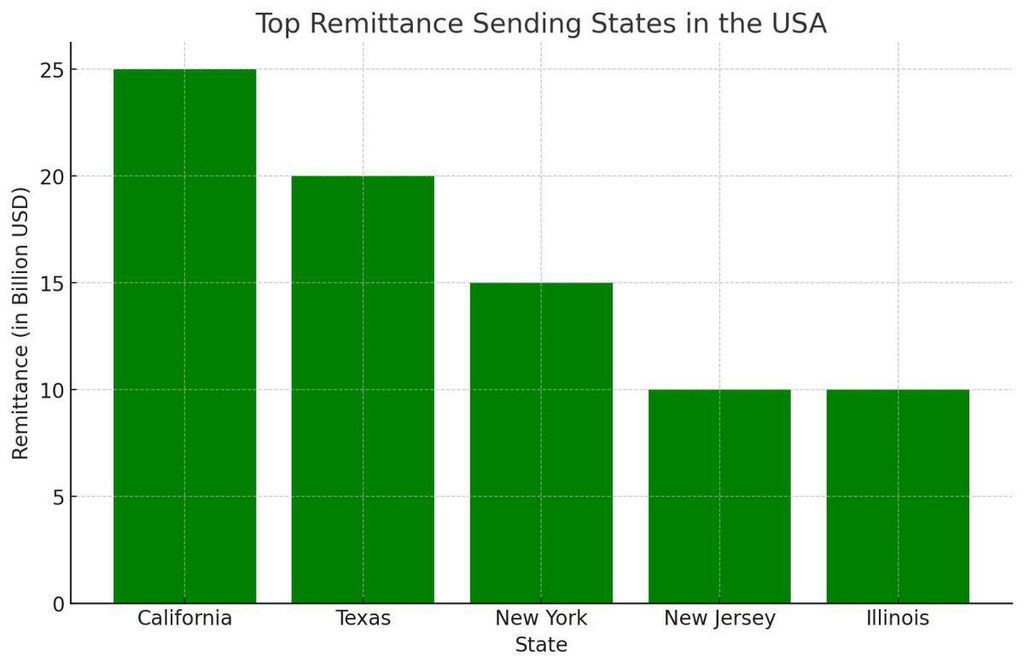
Below are some charts and graphs to illustrate these trends:
Annual Remittance Flow from the USA to India (2010-2023)
Breakdown of Remittance Usage
Top Remittance Sending States in the USA
The flow of money from the Indian diaspora in the U.S. to India is driven by a blend of cultural, economic, and personal factors. Whether it’s supporting family, investing in property, planning for retirement, or contributing to charitable causes, these remittances play a crucial role in the lives of both the senders and recipients. Understanding these trends is essential for grasping the broader economic and social dynamics at play. Jai Ho India!!
Vijay, originally from Hyderabad and living in the USA for the past eight years, has been resisting his mother’s constant urging to buy a house in India. She always reminded him how important it was to have a permanent home back in India.
After years of saying no, Vijay finally gave in and bought a modern apartment in Hyderabad. His decision was not only influenced by his mother’s wishes but also by the uncertainty surrounding his future in the US due to the long wait for a Green Card.
Rohan, on the other hand, bought a home for his parents in Mumbai. Even though he has no plans to return to India, he wanted to make sure his parents live comfortably, surrounded by all the luxuries in a modern apartment.
His parents often visit the US to spend time with him and their grandson, but they love being in Mumbai, where they’ve spent most of their lives. Though Rohan sometimes feels guilty about not having them live with him, he finds comfort knowing they have everything they need, including excellent medical facilities.
So what’s the common thread in Vijay’s and Rohan’s stories? It’s the same reason why so many articles, like The Economic Times NRI Desk or ICICI Bank’s Property Guide for NRIs, all focus on one big goal for NRIs: buying a home back in India.
Even top developers like Rustomjee, known for building high-end properties in Mumbai and other metro cities, have released special guides for NRIs. TheirUltimate Guide for NRIs Buying Property in India in 2024 is packed with tips on what types of properties NRIs can buy, an overview of FEMA rules, tax implications, and a step-by-step process to make property buying easier.
All these efforts have a clear purpose: to attract NRIs to invest in India’s real estate market.
Before we dive into why NRIs are buying properties in India in record numbers, let’s take a closer look at the current trends driving NRI real estate investments.
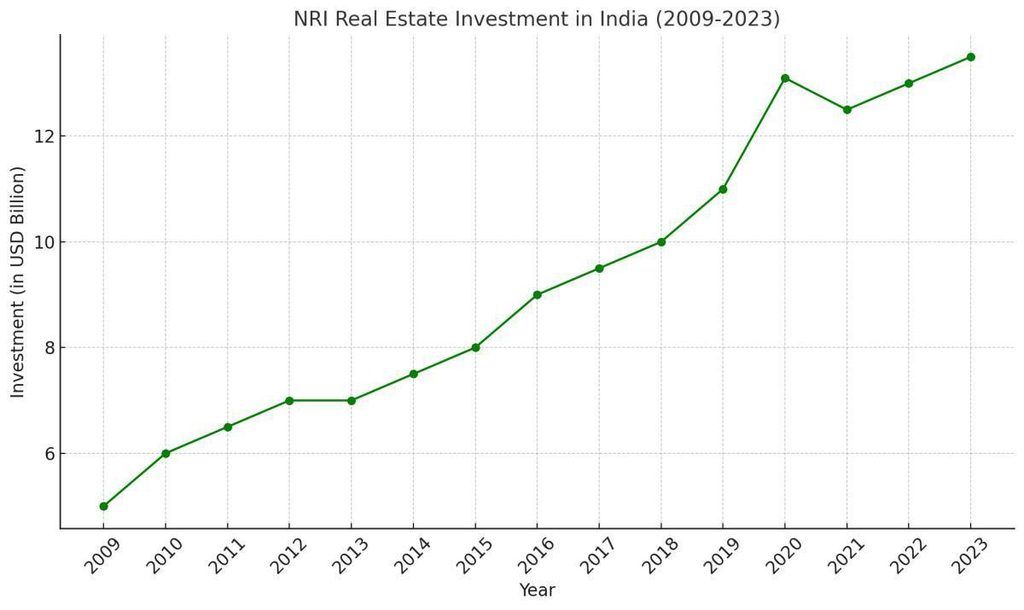
The real estate market for NRIs has experienced remarkable growth, with investments in 2023 alone surpassing $13 billion.
By 2025, NRI investments are expected to make up 20% of all real estate transactions in India. This surge is being driven by several factors, including favorable currency exchange rates, increased transparency through regulations like the Real Estate Regulatory Authority (RERA), and the adoption of digital platforms that make remote property purchases more convenient.
Cities: While traditional investment hubs like Mumbai and Bengaluru continue to capture the most attention, there is a noticeable shift towards Tier 2 and Tier 3 cities.
According to HomesKart and Zoltan Properties, emerging cities such as Pune, Ahmedabad, and Kochi are becoming popular among NRIs for their affordability and strong growth potential.
Investment Patterns: NRIs tend to focus on high-value properties, with a significant portion of their investments targeting residential properties worth over ₹1 crore, particularly in premium and luxury segments.
Real Estate Sector Size: India’s real estate market is projected to reach $1.04 trillion by 2029, up from $227 billion in 2024, driven by a combination of domestic and NRI investments.
Market Growth: The residential real estate sector alone is expected to grow at a compound annual growth rate (CAGR) of 24.77% from 2024 to 2029.
For NRIs, India’s real estate market offers both a deep emotional connection and a solid financial opportunity, bolstered by supportive policies and advances in technology.
The chart above illustrates the NRI real estate investments in India from 2009 to 2023. The data shows steady growth over the years, with key spikes around 2019-2021 driven by several factors, including currency fluctuations, regulatory reforms, and the COVID-19 pandemic.
Data for NRI Real Estate Investments (2009-2023)
If we were to look at the data for the past 10-15 years, the trend would likely show fluctuations driven by key factors like currency movements, global economic conditions, and policy reforms in India.
Here’s an estimated trend over the last 10-15 years:
2009-2013: Investments were moderate (~$5-7 billion), influenced by global financial recovery post the 2008 crisis and cautious NRI sentiment due to policy uncertainties in India.
2014-2015: A gradual rise (~$8 billion) as India’s economic reforms started taking shape, including relaxed norms for foreign direct investment (FDI) in real estate.
2016-2017: A slight dip (~$7-9 billion) as the market adjusted to the new RERA regulations and demonetization in India, which temporarily affected liquidity in the real estate market.
2018-2019: A steady increase (~$10 billion), driven by regulatory clarity, favorable currency conditions, and the growing preference for luxury real estate among NRIs.
2020-2021: The pandemic-related spike (~$13 billion), as explained earlier, caused by a mix of currency advantages, emotional investments, and the digitalization of the buying process.
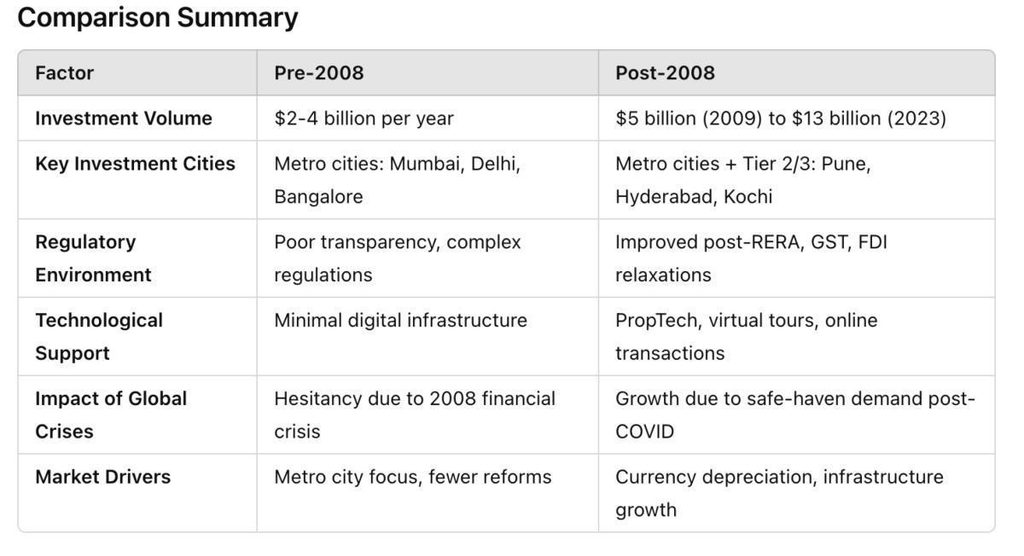
NRI Real Estate Investment Pre-2008 vs. Post-2008:
The pre-2008 period was characterized by a cautious approach from NRIs, with smaller volumes of investment, limited to metro cities and faced with regulatory complexities.
Post-2008, the market matured significantly with regulatory reforms, increased transparency, and wider geographic options.
This allowed NRIs to expand their investments across a broader spectrum, leading to the substantial growth seen over the last decade.
Various insights are derived from general trends observed in NRI investments, currency advantages, and the impact of government reforms like FDI norms. These sources provide a mix of market data.
In recent years, Non-Resident Indians (NRIs) have increased their real estate investments in India significantly. This trend is driven by a mix of economic, technological, and emotional factors.
Let’s explore some of the key reasons behind this surge in NRI property purchases and the broader implications for the Indian real estate market.
1. Green Card Limbo and Immigration Uncertainty Many NRIs, especially those in the U.S. on H1B or L1 visas, face an uncertain future due to the Green Card backlog, which can take decades to resolve.
With layoffs and visa expiration risks, the stress of potentially having to leave the U.S. is real. According to data from USCIS, Indian nationals face some of the longest Green Card waiting times, stretching over 100 years in some cases due to per-country caps.
As Rahul Mehta, an NRI living in New Jersey, explains: “I’ve been on an H1B visa for over seven years, and there’s no clarity on when or if I’ll get my Green Card. Having a house in India gives me a safety net. If I ever need to return, I know I’ll have a home there.”
Given the immigration challenges, many NRIs are purchasing homes in India to have a permanent residence, just in case their U.S. plans don’t pan out. Buying property in India becomes not just a financial decision but also a plan for emotional and practical security.
2. Lucrative Investment Returns
Indian real estate continues to offer high returns compared to global markets, with cities like Mumbai, Delhi, and Bangalore showing consistent property value growth over the last decade. Even Tier 2 and Tier 3 cities like Pune and Hyderabad have seen annual growth rates of over 10% in the past five years.
For example, Vikas Sharma, living in London, invested in an apartment in Pune in 2015: “I sent small amounts each month to pay off the loan, and today the property is worth almost double. Plus, I get rental income from it.”
NRIs are drawn to real estate as a tangible asset, offering security and potential rental income compared to volatile investments like stocks or cryptocurrencies.
One key driver is the depreciation of the Indian Rupee against major currencies like the U.S. dollar and British pound, giving NRIs greater purchasing power and making real estate acquisitions in cities like Mumbai, Bengaluru, and Delhi more appealing.
Indian real estate also offers higher rental yields than many global markets, especially in major urban centers where demand for residential and rental properties is strong.
For example, Bengaluru’s thriving IT sector and startup culture have increased demand for rentals, ensuring steady returns and long-term capital appreciation.
Government reforms, such as the Real Estate Regulatory Authority (RERA), have further boosted NRI confidence by increasing transparency and protecting buyers from fraud and delays, making real estate in India a safer and more attractive investment option.
3. Buying Homes for Parents Many NRIs, especially those who are the only child or whose siblings also live abroad, feel the responsibility of ensuring their parents live comfortably in India.
Modern apartments with 24/7 security, medical facilities, and access to care services have become a go-to solution. Apartments in gated communities provide peace of mind for both parents and NRIs living thousands of miles away.
Rahul Vaidya, a Bay Area resident, explains: “When my father passed away, my mother refused to move to the U.S. with me. So, I bought her a modern apartment in Mumbai with all the amenities. There’s a caretaker for her, and I monitor things remotely. She’s healthier now, and I feel more relaxed knowing she’s in good hands.”
Many NRIs purchase properties for their parents in cities like Mumbai, Pune, and Hyderabad, where senior-living options are growing.
This not only takes care of their aging parents but also provides a future home should they return.
4. Fear of Missing Out (FOMO) In the NRI community, especially in tightly-knit circles, real estate investments can sometimes feel like a bandwagon effect.
When one family member or friend invests in a property back in India, others follow suit, not wanting to miss out on what is perceived as a golden opportunity.
According to Suresh Patel, an NRI living in New York: “It felt like everyone I knew was buying property in India. I didn’t want to be the only one left out if prices skyrocketed. In hindsight, it was a great decision as property prices in Bangalore, where I bought, have appreciated by 30%.”
This herd mentality (referred to as “bhedchal” in Hindi) is driven by the fear that if they don’t invest now, they’ll miss out on the appreciation and growth that Indian real estate promises.
5. Regulatory Reforms (RERA and GST) The introduction of RERA (Real Estate Regulatory Authority) in 2016 has been a game-changer for NRIs, ensuring transparency in property deals and project completion, thereby making investments safer.
Developers are now held accountable, and stricter timelines have increased investor confidence.
Similarly, the Goods and Services Tax (GST) has simplified the tax structure, reducing confusion surrounding property taxes. As a result, NRIs feel more assured when investing in Indian properties.
Anjali Gupta, a Chicago-based NRI, shares: “Before RERA, I was hesitant to invest in India due to project delays and lack of transparency. Now, I know I’m protected under RERA, and my investment is safer.”
In addition, favorable government policies are boosting NRI confidence. The Indian government has introduced several reforms that have made real estate more accessible and appealing to NRIs.
RERA has fostered a more transparent environment, ensuring developers meet their commitments and protecting buyers from delays and legal issues.
Furthermore, the government’s infrastructure initiatives, such as smart cities and metro expansions, have made real estate investment even more attractive.
6. Long-Term Rental Income Potential With India’s growing economy and urbanization, NRIs are increasingly investing in properties that offer rental income.
Major cities like Bangalore, Mumbai, and Hyderabad have strong demand for rental housing due to the influx of IT professionals and students.
A well-located property in these cities can yield rental returns of 3-5%, with capital appreciation on top.
Priya Nair, an NRI in Dubai, bought a flat in Hyderabad near the IT corridor: “I’m earning a steady rental income every month, and the property has appreciated by 40% since I bought it three years ago.”
This combination of steady rental yields and potential for long-term growth makes Indian real estate a lucrative option for NRIs.
7. Technology and Increased Transparency The rise of PropTech (Property Technology) has made it easier for NRIs to invest in Indian real estate. Platforms offering virtual property tours, 3D walkthroughs, and secure online transactions have removed the need for NRIs to travel to India for property purchases.
From exploration to documentation, everything can now be done remotely.
Sandeep Malhotra, an NRI in Australia, shares: “I never thought I’d buy a property without visiting, but the technology today makes it feel like I’m there in person.”
This ease of access has significantly boosted NRI interest in real estate, making remote investments more common.
Additionally, many developers and property management companies now offer end-to-end services tailored specifically for NRIs, including property inspections, legal assistance, tenant management, and rent collection.
These services have addressed one of the biggest challenges NRIs previously faced—managing properties from abroad.
8. Tax Benefits NRIs enjoy the same tax benefits as resident Indians on home loans. Under Section 24(b) of the Income Tax Act, they can claim deductions on interest paid on home loans up to ₹2 lakh per year.
Additionally, under Section 80C, they can claim up to ₹1.5 lakh on principal repayment. Furthermore, rental income is taxed, but NRIs can reduce their liability by deducting maintenance costs and property taxes.
Nandini Rao, an NRI based in London, notes: “I was pleasantly surprised to find that the tax benefits for NRIs are on par with residents. It made the decision to invest even easier.”
9. India’s Growing Economy and Infrastructure Development India’s rapid economic growth and infrastructure development have significantly boosted the attractiveness of its real estate market.
Projects like the expansion of metro systems, highways, and smart city initiatives in cities like Ahmedabad, Pune, and Kochi have driven up property values, even in Tier 2 and Tier 3 cities.
Many NRIs see this as the ideal time to invest before prices rise further. Ajay Iyer, an NRI from Singapore, shares: “The infrastructure boom is the biggest factor for me. I bought a property in Pune, and with all the development happening, its value has shot up.”
10. Emotional Connection and Desire to Return Despite living abroad for years, many NRIs maintain a strong emotional connection to India. For some, owning a home in their homeland helps them stay connected to their roots, while for others, it forms part of a long-term plan to return to India, particularly after retirement.
Arun Singh, an NRI in Canada, shares: “I want my kids to know where they come from. Buying a home in India is my way of maintaining that link.”
As India’s urban infrastructure improves and the standard of living rises, NRIs are increasingly drawn to luxury properties.
High-net-worth NRIs are particularly interested in gated communities, villas, and premium apartments that offer world-class amenities, such as smart home technologies, eco-friendly features, and top-notch security.
Cities like Bengaluru and Mumbai have seen a surge in demand for luxury homes, driven by the desire for safety, privacy, and a high quality of life.
Gated communities and premium residential projects are especially popular among NRIs seeking properties that offer a cosmopolitan lifestyle, with access to top educational institutions, healthcare, and entertainment options.
The rise in NRI investments in Indian real estate reflects a deeper pursuit of security, growth, and emotional connection. Whether it’s to safeguard against visa uncertainties, plan for future returns, or stay linked to their roots, NRIs find real estate a powerful tool.
With favorable exchange rates, government reforms like RERA, and new technology making investments easier, India’s real estate market has become more accessible and appealing.
As India’s infrastructure expands and demand for urban housing grows, NRIs have a unique opportunity to invest in a rapidly developing market.
This is more than just a financial move—it’s about building a lasting bond with home and creating a secure future. For NRIs, now is the perfect moment to invest in not just property, but in their vision of tomorrow.
The mysterious death of Suchir Balaji, a former OpenAI engineer, has shocked the tech industry. Balaji, 26, was found dead in his San Francisco apartment on November 26, 2024.
Authorities ruled it a suicide, citing a self-inflicted gunshot wound and no evidence of foul play. However, his family’s doubts and his whistleblowing activities have raised significant concerns.
Legal Concerns Raised by Suchir Balaji
Balaji made serious allegations against OpenAI, including:
Copyright Infringement: He accused OpenAI of using copyrighted materials without authorization to train its AI systems, infringing on creators’ rights and gaining an unfair market advantage.
Breach of Confidentiality: By going public, Balaji risked legal action from OpenAI, which denied wrongdoing. His evidence reportedly included detailed documentation suggesting company-wide practices that could impact intellectual property laws in the AI era.
Corporate Retaliation: After leaving OpenAI in August 2024, Balaji feared retaliation for his whistleblowing. His family reported unusual activity on his devices after his death, suggesting attempts to suppress evidence related to his claims.
Evidence and Claims Presented by Balaji
Balaji’s main assertion was that OpenAI misused copyrighted content to train its AI systems, violating creators’ rights and distorting market competition. His evidence included:
Documentation of Copyright Violations: Records allegedly showing OpenAI’s unauthorized use of copyrighted materials during AI model training.
Relevant Documents: Court filings indicated Balaji had critical documents supporting lawsuits against OpenAI by media outlets and copyright holders.
Public Statements and Writings: In a blog post and media interviews, Balaji questioned OpenAI’s reliance on “fair use” as a defense for its data practices, suggesting potential legal challenges.
He had scheduled interviews with major media outlets and prepared a legal strategy. His untimely death left questions unanswered, including the whereabouts of a pen drive reportedly containing crucial evidence, which remains missing.
Parallels with The New York Times vs. OpenAI
Balaji’s claims align with ongoing legal battles, notably The New York Times lawsuit against OpenAI. The Times accused OpenAI of reproducing its articles without authorization, undermining journalism’s financial model.
Both cases highlight concerns about transparency in AI data usage and underscore the need for regulatory clarity and corporate accountability in the AI era.
Impact of the Incident
Balaji’s case highlights the challenges faced by whistleblowers and the need for robust protections. His death and allegations have intensified calls for greater transparency and reform in the tech industry.
The legal and policy outcomes may influence how AI companies handle data and protect whistleblowers in the future. As the industry evolves, this case could play a pivotal role in shaping the treatment of whistleblowers and the impact of their disclosures.
Conclusion
Suchir Balaji’s story is a poignant reminder of the personal costs of seeking justice against powerful entities.
His death demands a thorough investigation to honor his memory and address the concerns he raised. As society grapples with the ethical and legal ramifications of AI, Balaji’s courage and tragedy underscore the need for a framework that protects truth-tellers and ensures accountability.
The fight for justice in his name continues, challenging us to build a system where transparency and ethics prevail over silence and fear.
The Reality of Students in the USA who come from the India to study and work. Every year, somewhere in India, a house is sold for a dream that lives 8,000 miles away. A father mortgages farmland.A mother pledges her gold jewelry.A family signs loan papers they will spend the next 10–15 years repaying. All … Read more
You’d think a company known for disinfecting just about everything would be better at cleaning up cyber messes. But in August 2023, Clorox found itself knee-deep in a digital disaster that had nothing to do with bleach and everything to do with a hacker group called Scattered Spider. And now, two years later, that little … Read more
 Skip to content