 Skip to content
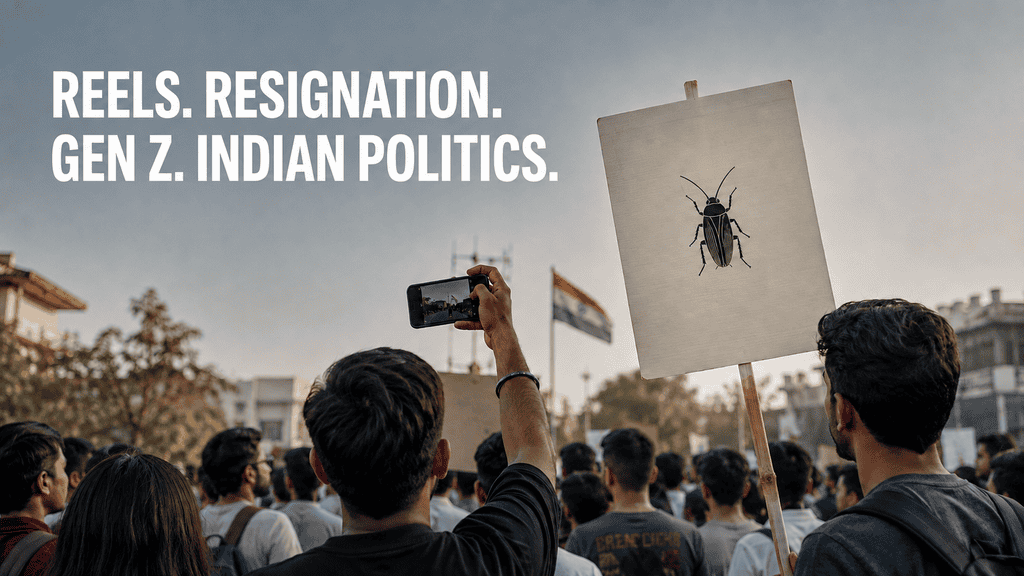
Dismissed as distracted and unserious, India’s youngest political generation turned memes, masks and short videos into a national movement powerful enough to force a rare cabinet exit.
Dismissed as distracted and unserious, India’s youngest political generation turned memes, masks and short videos into a national movement powerful enough to force a rare cabinet exit.
Gen Z has heard all the accusations before: too distracted, too comfortable, too addicted to phones and too unserious to care about politics.
Then India’s young people locked in.


In July 2026, weeks of youth-led demonstrations over examination paper leaks, education reform and shrinking job prospects culminated in the resignation of Union Education Minister Dharmendra Pradhan. What began online through satire and memes had grown into a nationwide movement that placed the Narendra Modi government under unusual public pressure.
The movement did not abandon seriousness; it repackaged it. Cockroach masks, superhero costumes, Instagram Reels and sarcastic placards captured public attention, while marches, a prolonged hunger strike and negotiations created political pressure.
The result challenged one of the most persistent stereotypes about Gen Z: that a generation fluent in memes cannot also be politically committed.
From an Online Joke to a National Movement
Gen Z is generally understood to include people born after 1996, although definitions vary. Only its older members can currently vote, but the generation’s political influence extends far beyond the ballot box. It can shape narratives, create pressure and move an issue from a social-media feed to the national agenda.
The Cockroach Janta Party, or CJP, demonstrated that power.
The satirical movement was founded by political communications strategist Abhijeet Dipke after controversial remarks comparing unemployed young people to “cockroaches” and “parasites” sparked widespread anger. Rather than reject the insult, supporters reclaimed the cockroach as a symbol of survival: difficult to silence, difficult to eliminate and impossible to ignore.
The humor attracted attention, but the grievances behind it were real. Students were angry about repeated examination irregularities, particularly the leak of a national medical entrance examination paper. The resulting retest affected approximately two million students. The protests also became an outlet for wider anxiety about unemployment, educational opportunities and government accountability.
Activist and education reformer Sonam Wangchuk emerged as one of the movement’s most visible supporters, completing a 26-day hunger strike. Protesters marched, faced police barricades, endured tear gas and demanded Pradhan’s resignation.
On July 25, Pradhan stepped down. The government also agreed to demands that included examination-system reforms, withdrawing police cases against protesters and compensating families of students who had died by suicide following the examination controversy.
Reuters described the confrontation as Modi’s biggest youth challenge since he became prime minister in 2014 and reported that Pradhan was only the second minister to resign following a scandal during Modi’s tenure.
That made the episode more than a viral moment. It became evidence that digital frustration, when connected to a concrete grievance and organized offline action, can produce a political result.
Gen Z Is Harder to Treat as a Permanent Vote Bank
Previous generations are often described as “legacy voters”—people whose political loyalties are strongly influenced by family, caste, community or regional identity and remain relatively stable over time.
Gen Z has not eliminated those influences, and no generation should be treated as politically uniform. However, younger voters appear increasingly willing to make their support conditional. A political party may win their approval on one issue and face their anger on the next.
Many young voters who have supported the BJP, for example, can still criticize the government over examination leaks, unemployment or policies affecting their everyday lives. Supporting a leader does not necessarily mean adopting that leader as a permanent personal identity.
This makes Gen Z difficult to manage through personality-driven politics alone. Young people can instantly retrieve old speeches, promises and interviews. A statement made years ago can return as a split-screen Reel within hours, placed beside a politician’s latest claim.
The internet has given ordinary voters a searchable political memory.
Gen Z does not merely listen to leaders. It fact-checks them, remixes them, parodies them and sometimes trolls them.
That does not automatically make every criticism informed or fair. But it does make political communication more exposed. A carefully manufactured image can now be challenged by thousands of creators working from their phones.
The Algorithm Is the New Political Editor
For Gen Z, political information does not wait to be searched for. It arrives.
It appears between a comedy Reel, a fashion video and a friend’s holiday pictures. A 90-minute political speech may receive limited attention, while one 30-second segment from that speech can reach millions of people before the day ends.
This does not mean framing has become less important. In fact, it has become more important. The person who selects the clip, adds the caption and chooses the music can influence how an entire speech is understood.
Instagram Reels, YouTube Shorts, memes and independent digital creators have therefore become central players in political communication. They influence which moments become visible, which contradictions become embarrassing and which grievances become shareable.
The Cockroach Janta Party understood this instinctively. It did not begin with a traditional party office, television campaign or established political machinery. It began with an absurd symbol and a message that fit naturally into internet culture.
The symbol brought people in; the seriousness of the issue kept them involved.
Political information found Gen Z through its feeds. Gen Z then carried that information into the streets.
From Rallies to Reels
Political leaders have recognized the shift.
Following the youth protests, Prime Minister Narendra Modi increasingly appeared in selfie-style videos and informal, vertically filmed social-media content. His outreach included youth-oriented language, pop-culture references and encouragement for creators to use formats such as “Get Ready With Me,” commonly known as GRWM.
The broader BJP communication system also began experimenting with shorter, less polished videos designed for Instagram and other youth-focused platforms. According to Reuters, Modi urged ministers to become more active on platforms popular with young people and to make their videos appear less scripted.
Leader of Opposition Rahul Gandhi adopted a more interactive approach, inviting students and Gen Z users to participate in an Instagram “Ask Me Anything” session. Serious questions about education and politics appeared alongside lighter exchanges designed to make the politician seem accessible and human.
These efforts reveal the new competition taking place in Indian politics. Politicians are no longer competing only for votes. They are competing for attention, authenticity and relatability.
But views, likes and playful comments do not automatically translate into trust. Gen Z is deeply familiar with influencer culture and can quickly recognize communication that feels overly manufactured. A leader may speak the language of the internet and still become the subject of the internet’s jokes.
The politicians have entered Gen Z’s digital territory. That does not mean Gen Z will accept them there.
Tackling Serious Issues With “Unserious” Humor
Traditional protests are associated with speeches, slogans, marches and hunger strikes. The CJP demonstrations included all of those—but added a distinctly Gen Z layer.
Some protesters appeared dressed as Spider-Man, Batman, Iron Man and other pop-culture characters. Others wore cockroach masks, recorded GRWM-style videos before attending demonstrations or used trending sounds to document what was happening around them. Placards turned examination leaks, unemployment and political frustration into punchlines designed to travel online.
Even confrontations with police were narrated through irony and dark humor.
From the outside, this behavior can appear chaotic or even inappropriate. But humor was not evidence that protesters lacked seriousness. It was a communication strategy, a coping mechanism and a form of political resistance.
Memes lowered the barrier to participation. A young person who might never watch a television debate could understand a joke about a paper leak within seconds. A superhero costume could attract a camera, but the protester’s explanation could then carry the political message to millions.
Gen Z did not make protest less serious. It made seriousness shareable.
Behind the costumes was genuine anger. Behind the Reels were students worried about their futures. Behind the cockroach symbol were young people who believed institutions had stopped listening to them.
The Danger of Politics by Algorithm
The same tools that give young people political power can also create serious problems.
Short videos remove context. Algorithms reward outrage. False claims can spread faster than corrections, and a clever edit can make a misleading argument feel convincing. Online movements may also become trapped inside ideological bubbles in which popularity is mistaken for accuracy.
There is another challenge: sustaining attention. A movement can dominate social media for a week and disappear when the algorithm discovers a new controversy. Turning online enthusiasm into lasting reform requires organization, leadership, negotiations and measurable goals.
The CJP movement succeeded because it connected viral creativity with a specific demand and sustained offline pressure. Its longer-term test will be whether it can continue influencing public policy after the trending hashtags fade.
Why Indian Americans Should Pay Attention
This transformation matters beyond India.
For many young Indian Americans, Indian politics is experienced less through newspapers or evening television and more through Instagram, YouTube and videos forwarded by relatives on WhatsApp. A political moment in Delhi can enter a Dallas, New Jersey or Bay Area family conversation within minutes.
That creates a new kind of transnational political participation. Members of the diaspora may not vote in India, but they can amplify stories, influence family conversations, support causes and shape how events in India are understood abroad.
It also makes reliable reporting more important. When politics travels internationally through short clips, the distinction between verified information, satire and propaganda can quickly disappear.
Gen Z Has Locked In—But What Comes Next?
India’s Gen Z has not rejected politics. It has rejected the assumption that politics must always look and sound traditional.
This generation may organize through Instagram, speak through memes and arrive at a protest dressed as Spider-Man. None of that prevents it from understanding injustice, demanding accountability or sustaining a movement.
The Cockroach Janta Party protests showed that digital culture can become democratic power when humor is connected to a real grievance and online attention is converted into collective action.
Gen Z has not replaced rallies with Reels. It has made Reels the road to the rally.
And after a movement born from memes helped force a Union minister’s resignation, no political party can afford to dismiss the next viral joke as “just the internet.”

Aditya Bhatia covers politics and current affairs from an Indian-American and NRI perspective.
He is a multimedia journalist and digital storyteller focused on news reporting, video production, and audience-first content. He combines strong storytelling with a commitment to delivering accurate and engaging news across platforms.